The Complete Guide to Isle Royale (2026): Trails, Wildlife, Weather, and How to Backpack It
Category: Trips and Places | Subcategory: Isle Royale
Tags: {"error":"model 'tinyllama:latest' not found"}
Published: 2026-06-24
The Complete Guide to Isle Royale (2026): Trails, Wildlife, Weather, and How to Backpack It
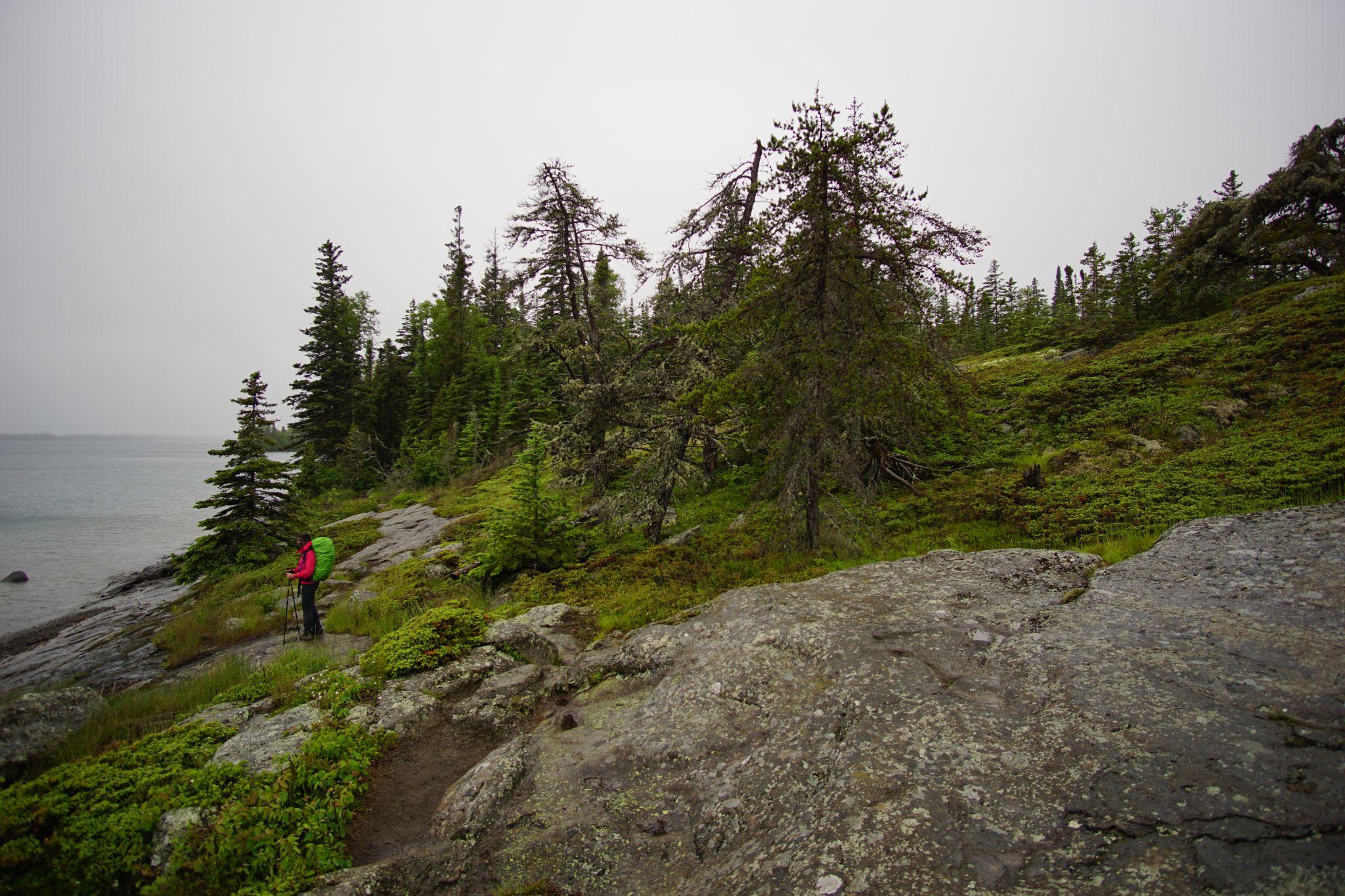
This is the most remote, wild place I have been to. It beckons respect and beauty, mystery and hardships. The beauty, hardships, and peace of the Isle combine to be an ingrained memory in my mind and the minds of many. The hours on a ferry or sea plan transport one to truly a new world, unlike any I have seen in the midwest. The elusive moose, howling wolves, and magical loons roam across the eden. Isle Royale is one of the least visited American National Parks, but the most revisited because of how special it is. My full six day journey details my route. This article is the definitive guide for backpackers, nature lovers, first timers, and repeat visitors.
About Isle Royale National Park
Where is Isle Royale
Isle Royale is a set of islands in the northwest corner of Lake Superior. It is 56 miles (90 km) from the Upper Peninsula of Michigan (U.P.) 22 miles (35 km) from Minnesota's shoreline near Grand Portage, and about 15 miles (23 km) from the Canadian shore. On a clear day, a backpacker can see Canada’s Sleeping Giant Provincial Park.
What Makes Isle Royale Unique
Isle Royale is an isolated, remote ecosystem on an inland sea. There are no cars, no roads, and solely two outposts, Copper Harbor and Windigo. Other than these, the 45-mile-long main island and 400-500 connecting islands are pure wilderness. There’s incredible old-growth boreal forests, fields of wildflowers stretching for hundreds of meters, and raw unimpeded ecosystems. Because of the isolation, animals on the island have become either a subspecies or an entirely new species from the mainland. The famous predator-prey studies of the wolves and moose are insightful in the world of evolutionary biology. This is a special place.
Quick Facts
- Size: the main island is 45 miles long and up to 9 miles wide
- Total number of island: ~450
- Park designation: national park
- Open Season: April 16th to October 31st. Outside of this, it becomes too harsh and dangerous to reach the island.
- Nearest towns are Copper Harbor, MI, Houghton MI, Grand Portage, MN
- Yearly visitors: ~29, 000
- Ranger stations: Visitor Stations are located at Rock Harbor on the North End of the main island and Windigo at the South end.
Planning Your Trip
The best time to visit is in the summer months of July and August. The weather is the mildest and the days are long. Weather is unpredictable in all months of the year. The Isle is overall very exposed and susceptible to extreme weather. Bugs are a constant in Isle Royale. For less bugs, go when it’s colder, when the bugs are less active. Crowds on the island is a relative word. One can walk the majority of the day without encountering someone on some parts of the island. Rock Harbour and Windigo do have more people, with crowds decreasing as one becomes further from these points. Campsites do fill up towards the end of the day, so starting early is recommended.
For trail conditions, these trails are primitive. Trails are well marked, but expect long slogs through deep mud, walking on planks over water for hundreds of meters, slippery rocks, and, potentially, walking on a Beaver dam. The trails near Rock Harbor and Windigo are more tame.
For Photography, check out Tobin Harbour at sunset, early morning for the fog that envelopes the island, Scoville Point, Moskey Basin for the loons, and the ridges full of wildflowers.
Author’s Note
The weather and bugs are no joke. On our trip in July, the temperature swung between 40’s and 80’s during the daytime. I strongly recommend bringing clothes that bugs can’t bite through and a mosquito net. I ended up with over 70 mosquito bites before I stopped counting, and yes, I was wearing my mosquito net and clothing that mosquitoes cannot bite through the majority of the time.
How to Get to Isle Royale
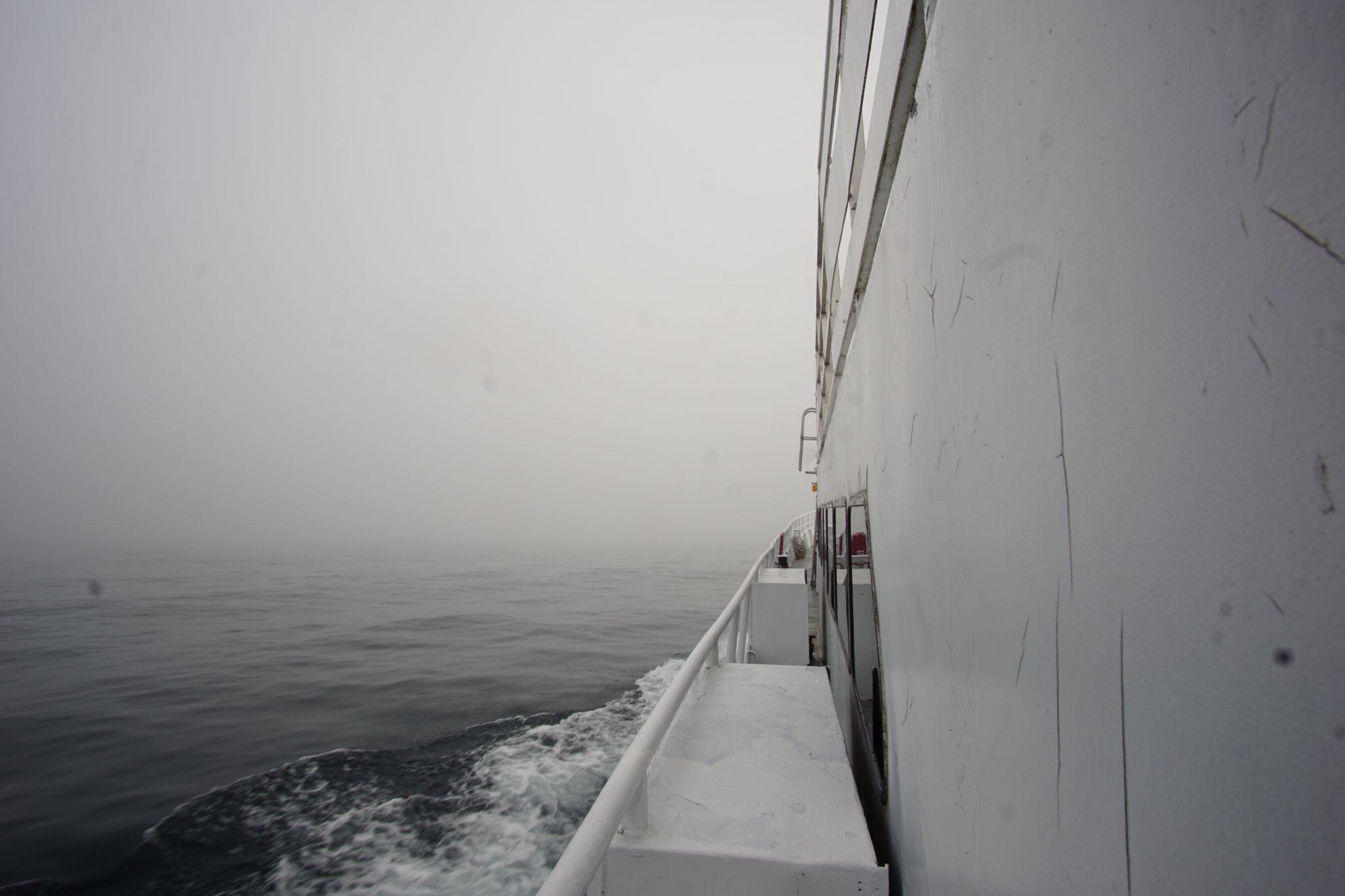
Your big decision points here are either ferry or seaplane, where to leave from, and which place to enter. Which place to enter is only a choice for seaplanes, as the pilots can choose where to land. For ferries, they have a particular port, either Windigo or Copper Harbor, that they go to.
Ferries
- From Copper Harbor, Michigan, the ferry Queen IV goes to Rock Harbor in 3 hours.
- From Houghton, Michigan, the Ranger III goes to Copper Harbor in 6 hours.
- From Grand Portage, Minnesota, Voyageur II goes to Windigo in 2 hours. This is the only ferry that goes to Windigo
Author’s Note
We personally did the one from Copper Harbor and can recommend it.
Seaplanes
Seaplanes depart either from Grand Marais, MN, or Houghton, MI. It takes about 30-45 minutes. They can deliver you either to Rock Harbor or WIndigo.
Which Should You Choose? Isle Royale Ferry vs Seaplane
The ferry is cheaper, though it takes longer. Seaplanes are more expensive and take a shorter amount of time. Both the ferry and the seaplane will warn about delays due to inclement weather. Seaplanes are more likely to cancel, though by how much is not known. Lake Superior is at times very rough for ferry passengers. Lake Superior and Isle Royale are famous for their shipwrecks. A small seaplane can be turbulent as well, but it’s over in 45 minutes. There are no recent major transportation accidents to or from the island. If you are budget conscious or traveling with a large group, I would recommend the ferry. If you are looking for more adventure and are a little flexible with timing, I would go with a seaplane. Personally, if we were to go again, I would go on a seaplane.
How to Get Around the Island
The Island’s streets are limited to the Rock Harbor and Windigo areas on opposite ends of the 45 mile island. Windigo means a spirit or monster of human origin who eats flesh from the folklore of the northern Algonquin tribe. The three main ways to get between these points on the main island are hiking, kayaking or canoeing, and taking the ferry, Voyageur II. A Voyageur is an early, European explorer, and often fur trapper, in the area. There are no major roads on the island. To reach the surrounding islands, canoe, kayak, or other boat is required.
How Long to Spend on the Island
If you plan on backpacking, you can spend up to two weeks exploring the island. Many make their way from Copper Harbor to Windigo and back via the famous Greenstone and Minong Ridges in just over a week. For a three-day backpacking trip, one can go down to Moskey Basin or Daisy Farm and back to Copper Harbor.
If you are not backpacking, then day trips from Rock Harbor are your only option. One can hike to Scoville Point one day, hike into the interior of the island on the second day to a mine or lookout, and return to civilization on the third day. Another option is to rent a boat and explore.
I will reiterate that Isle Royale is remote with unpredictable weather. The trail conditions because of the weather can make hiking more difficult. It’s advisable to pad time.
Permits, Fees, and Park Regulations
For fees, a national park pass covers payment for the park, including backcountry permits; otherwise it is $7/person/day. Leave No Trace should be strictly enforced. There are plenty of places that can only be reached by a multi-day trek, so pack in pack out. As for park-specific rules, one must bring a food container, like a bear canister on the island and put this into a food locker at night. Fires are banned for most places, and it is so buggy at night that no one will want to be out anyways.
Isle Royale Geography, History, and Ecology (High-Level)
The Island’s Geological Origins
The islands formed 1.2 billion years ago due to a massive rift in the Earth’s crust. Lava flowed and oozed from the opening, resulting in a massive powerful island. A similar, connecting rift also shaped the Keweenaw Peninsula. After this, repeated ice ages up to 11,000 years ago receded and in doing so carved and shaped the isle into the distinct landscape it has today. The is the rising one centimeter per year due to Isostatic rebounding. Isostatic rebounding is crustal rebounding from the removal of the massive weight of glacial ice from the most recent Ice Age.
Major Ecosystem Types
At first glance, Isle Royale appears homogenous in its environment, but upon hiking and observation, the trails lead you through vastly different ecosystems. Isle Royale contains five major ecosystems — boreal forest, arctic‑alpine ridges, wetlands, bogs, and sheltered harbors. These ecosystems create the island’s unique biodiversity and shape the hiking experience.
Boreal forests cover most of the islands with their announcement of evergreens. Some of the boreal forests are also old growth, brimming with life and fascinating lichen. Most of the island is filled with towering second growth.
Alpine ridges and the rocky area surrounding Scoville Point dot the island with wildflowers, no trees, and smaller, alpine plants that can live in harsh conditions. Often called arctic-alphine, the environment has plants found commonly much further north in the Arctic fields of Canada. It is exciting and special to see this, and only several hundred acres in all of the U.S. have an ecosystem such as this.
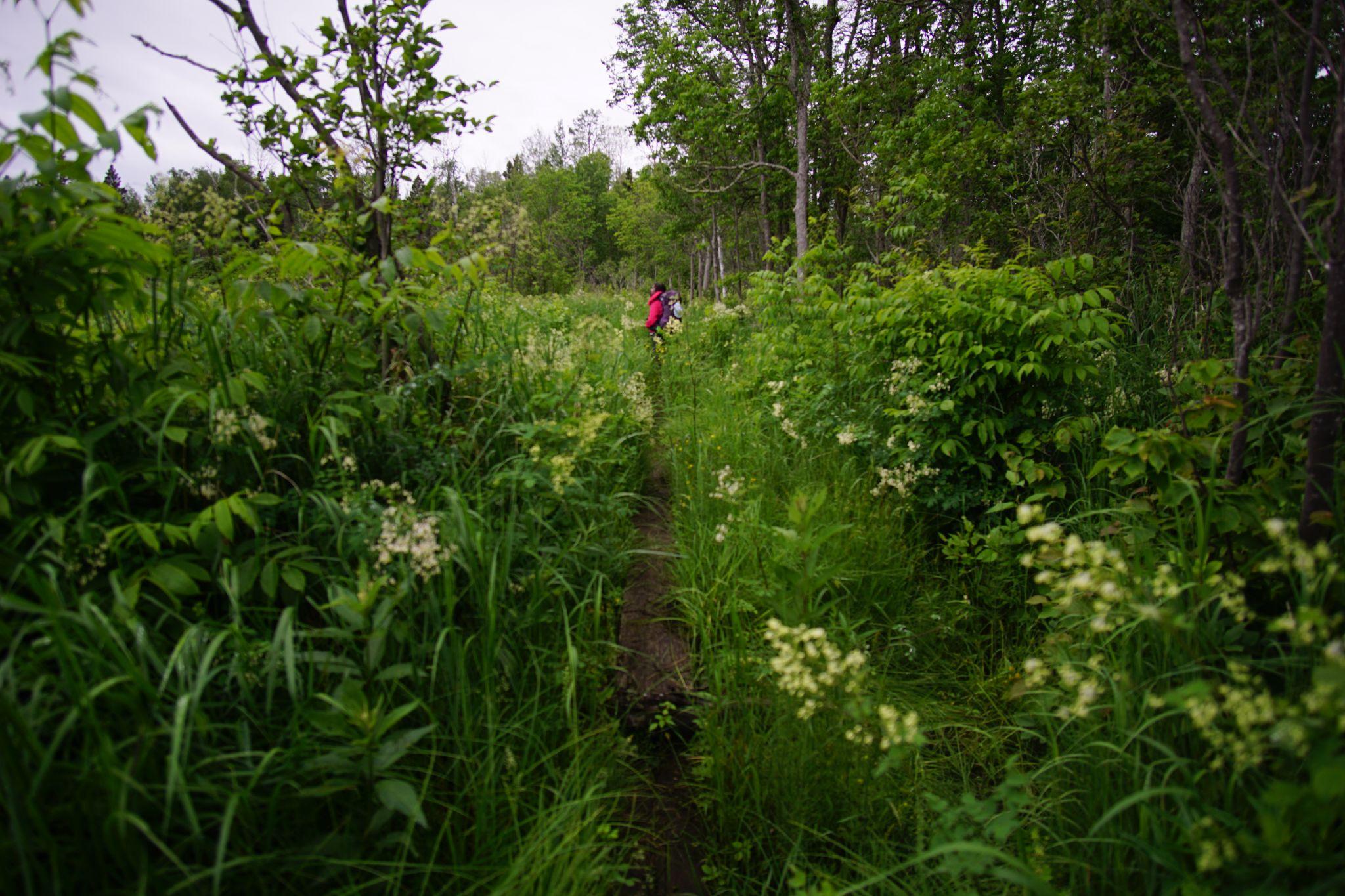
Wetlands are abundant on Isle Royale with many beavers calling it home. There are plenty of wetlands that can be found by looking at a map. One of our favorites is the trail from Hatch Lake to the Minong Ridge.
Author’s Note
We did have to hike across a beaver dam during our hike. Now think about how did the beavers get there? It is 15 miles to the nearest mainland.
Lowland bogs cover many of the areas surrounding the rivers. Here the trail continues on planks of wood inches from the water looking into the clear water below. These have their own set of unique plants and animals. Moskey Basin heading to the Greenstone is a great area to see this ecosystem.
Harbors are another amazing ecosystem, great for providing shelter for animals and people alike. Full of loons, moose, fish, and other birds, harbours are great for viewing wildlife. Tobin Harbour, Rock Harbor, Todd Harbour, and Little Todd Harbour are beautiful spots to visit.
Lakes, Streams, and Rivers are additionally important ecosystems. Littoral zones are the shallow, nutrient-rich nearshore areas near water. In most urban areas, water levels and drainage are strictly controlled, meaning that most see an unimpeded littoral zone for the first time on Isle Royale. At Isle Royale, it is among the best ecosystems to visit because of the abundance of life in these areas. One littoral zone at East Chicken on the way to McCargoe Cove is especially beautiful.
Endemic Plants & Unique Species
The Packera insulae-regalis, Packera Isle Royale, is the only plant species known to be endemic, or limited solely to the island. Many species on the Isle differ from their mainland cousins. For example, the moose and wolves on the island have grown to be smaller than their mainland counterparts. They are not considered different species. The old growth boreal forest is unique as nearly all of the Midwest has been logged and much of it continues to be logged. Arctic alpine is a special environment found only in a couple places within the U.S. Tourists come to see fully grown sugar maple, balsam fir’s, white spruce, and intact beautiful forests. The size of plants are also surprising, including the ferns that went up to the shoulders of my six-footr frame. Rare plants include devil’s club, calypso orchids, yellow mountain saxifrage, pearlwort, eastern paintbrush, and ladies-tresses orchids.
Wildlife on Isle Royale
Isle Royale houses incredible wildlife. It is most known for its moose, wolves, and loons.
Moose
The population of moose is around 700 on the island, down from 2,000 in 2019. The population most likely arrived by swimming the 15-20 miles in the early 1900’s, with the population growing rapidly. Scientists have excavated Caribou bones from this time as well, and believe they disappear from the island due to overgrazing. The size of an average Isle Royale is smaller than an average moose on the mainland. The best times to see them are during sunrise and sunset.
Author’s Notes
On the recommendation of a ranger, we sat with a bottle of wine on the dock of Tobin Harbour watching the sunset. Moose like to swim between the islands, and on the six days we were there, this was the only moose we saw.
Wolves
Gray wolves are believed to come to the island in the 1940’s, most likely from traveling over the ice in the winter. Gray wolves are incredibly elusive, though we did hear them at Hatch Lake at night. They, along with the moose, create an isolated example of a predator-prey relationship in biology that biologists have been studying for decades. The moose populate to the limits of the vegetation of the island, and the wolves hunt the younger and older moose.
Author’s Note
On our final night, the rangers informed us that the wolves were getting too close to Rock Harbor Campground and so they were going to paintball them to deter them. He warned us to stay in our shelter that evening in case we here them.
Loons, Foxes, Beavers, Efts, and More
Loons, foxes, beavers, and efts make up many of the other iconic species of the island. Loons with their beautiful red eyes and monochromatic feathers are a delight to see. Their spooky, shrilling calls echo across the long lakes of the Island. In the spring, little loonlings accompany their parents in the harbours. We spotted many families of loons and loonlings in Moskey Basin.
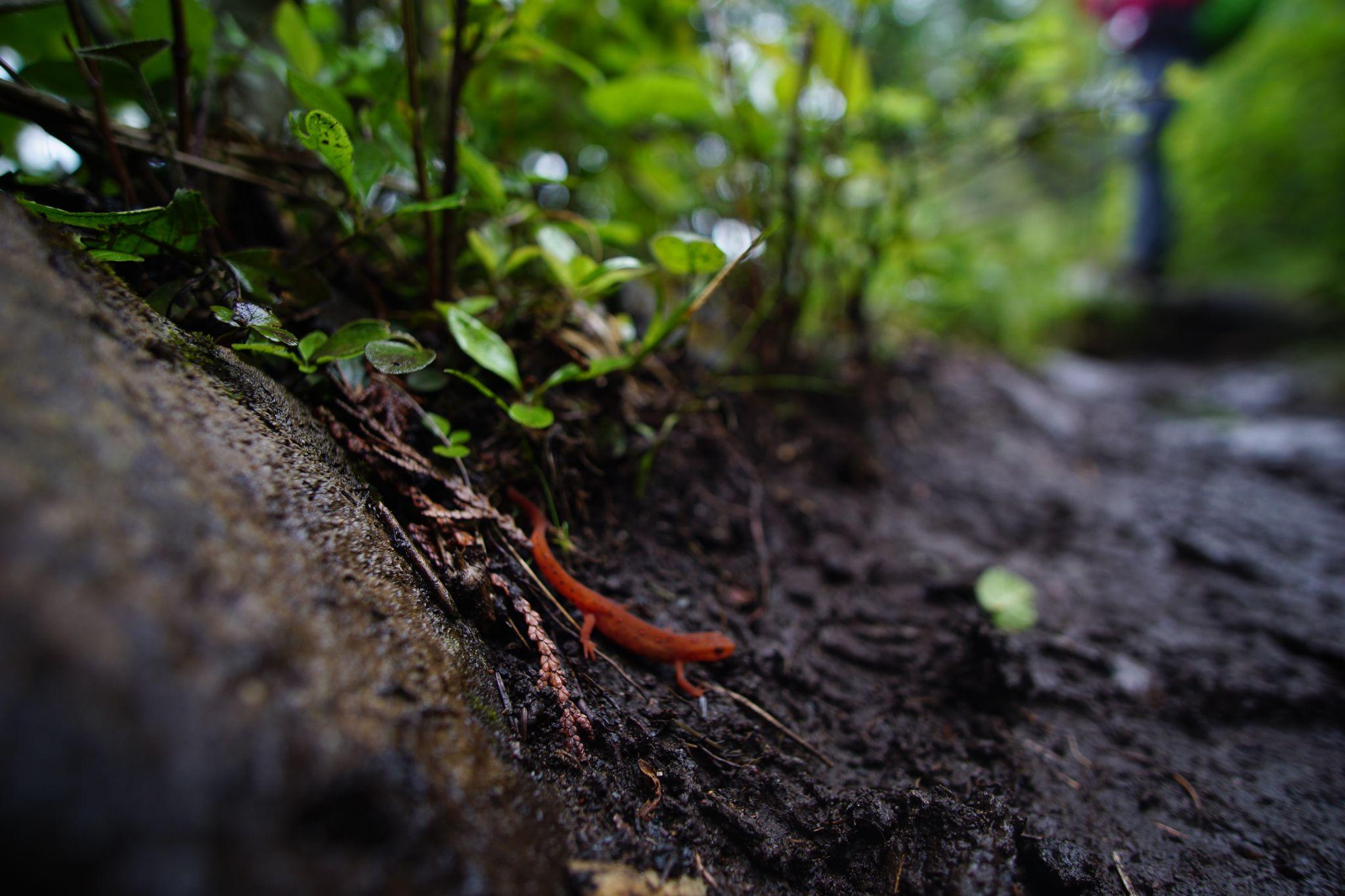
Foxes dot the island and we encountered ours walking south around Three Mile Island Campground on the trail. The playful red fox was hunting. Beaver families are in several places on the island. On our way from Todd Harbor to Hatch Lake, we encountered a huge, multi-tiered beaver dam, and had to walk across the beaver dam to continue to the trail. Red efts, or eastern newts, can be found along the trail most often in shaded wet, but not soaked, trails.
Wildlife Viewing Tips, Safety, & Etiquette
Wildlife are most active during sunrise and sunset. Many animals are more visible in open spaces such as harbors or fields. The lack of human presence also plays a factor.
It’s important to understand that humans impact the wildlife on Isle Royale, even in a place as remote as this. We are visitors in their space. The animals have started to learn the patterns of humans and associate them with food. Going forward, Isle Royale requires backpackers to store their food in safe containers such as hard-sided containers like a bear canister or put them in food lockers found on each campsite.
The general rule is that one should not be so close to the wildlife as to disturb it. Moose and wolves especially are dangerous and should be treated with respect and given a wide girth.
The Trails of Isle Royale
Isle Royale has miles of trails that entertain backpackers for more than weeks at a time. The trails vary between easy loops near the outposts to remote journeys to some of the wildest land in the Midwest.
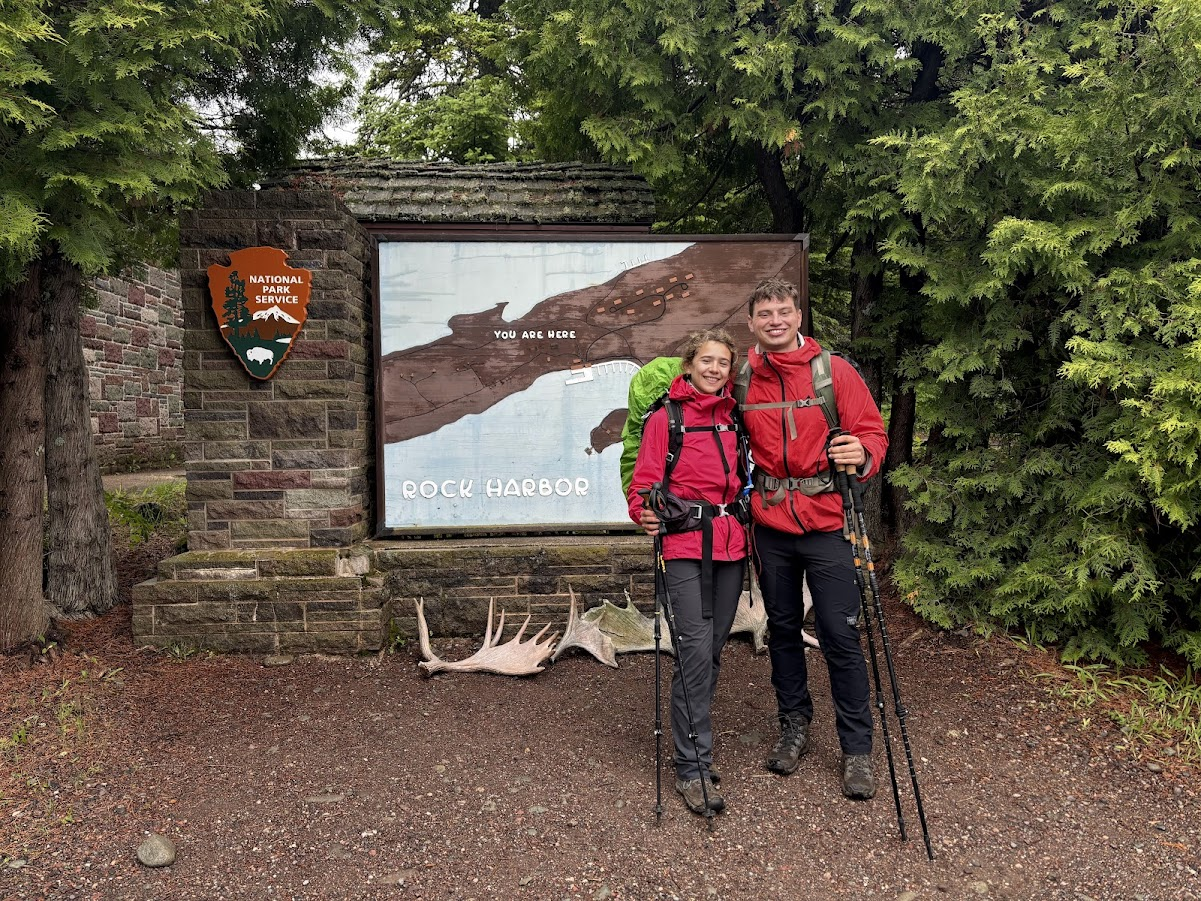
Overview of Major Trail Networks
The trail networks are highly dependent on where one lands. This is a rugged 45-mile-long island that takes days to cross. Here are the main trail networks.
Greenstone Ridge Trail
This is the island’s central, iconic ridge that goes directionally through the mainland of the park. It takes multiple (3-5) days to cross. The trail takes one through amazing carpets of wildflowers, remote lakes, and untouched beauty. The campsites and water are normally off the ridge, so hikers try to plan to stay on the ridge until their campsite. Shelters can be found at the campsites on the exterior of the island, and a tent is needed for any campsites on the interior of the island.
Minong Ridge Trail
This is the island's other main ridge trail crossing the majority of the island. It’s on the upper side of the island towards Canada. In addition to crossing some of the interior lakes, the trail also visits remote harbours on the Lake Superior shore. This is the less popular ridge trail of the two.
Daisy Farm / Three Mile corridor
This area is directly south of the Rock Harbor and is often popular for shorter backpacking trails and day hikes from Rock Harbor. The harbour trail threads through old growth boreal forests to alpine pockets overlooking views of the water. Points of interest include Siskowit mine, Lookout Louise, Mount Franklin, and even the fire lookout tower on Mount Ojibway. Know that moving to the interior of the island means hiking up to a ridge. The look outs are beautiful, and the change in environment is worth viewing.
Tobin Harbor / Scoville Point
Tobin Harbor is a close walk from Rock Harbor and is a great place to view moose and watch the sunset. One can also rent the canoe and kayak to be launched from here. Sea planes land in Tobin Harbor, and then people walk to the Rock Harbor area. Scoville Point is at the north end of the Rock Harbor Peninsula. A beautiful 4.5 mile hike takes one through stretches of large boreal forest, arctic alpine, and large rock cliffs. The wading pools near the cliffs have warm water to swim in on hot, sunny days. I highly recommend this hike, and the area is unique to the national park.
Feldtmann Ridge segment
The Feldtmann Ridge is an area reached from Windigo or the Greenstone Ridge. This is a beautifully remote area and connects into a wonderful loop trail that can be done in less than a week.
Canoe and Kayak Trails
Canoe and Kayak trails are for experienced adventurers as many routes have large stretches exposed to Lake Superior. A popular trail is to go from Rock Harbor to Windigo, and then take the ferry to return to the starting point. Canoe portages are possible to Intermediate Lake, Lake Richie, and Wood Lake. Make sure to wash the vessel before transferring to the interior lakes to not transfer invasive species. Another way to explore is take the Voyager II to a given drop off point and explore. Make sure to give yourself extra days to explore in case the weather is bad. Canoe Rocks and outer islands are also reachable. By going along this remote shoreline, you will visit some of the most remote and beautiful areas in the national park system and explore solitude as if it was pre-humanity.
Difficulty Ratings & Terrain Types
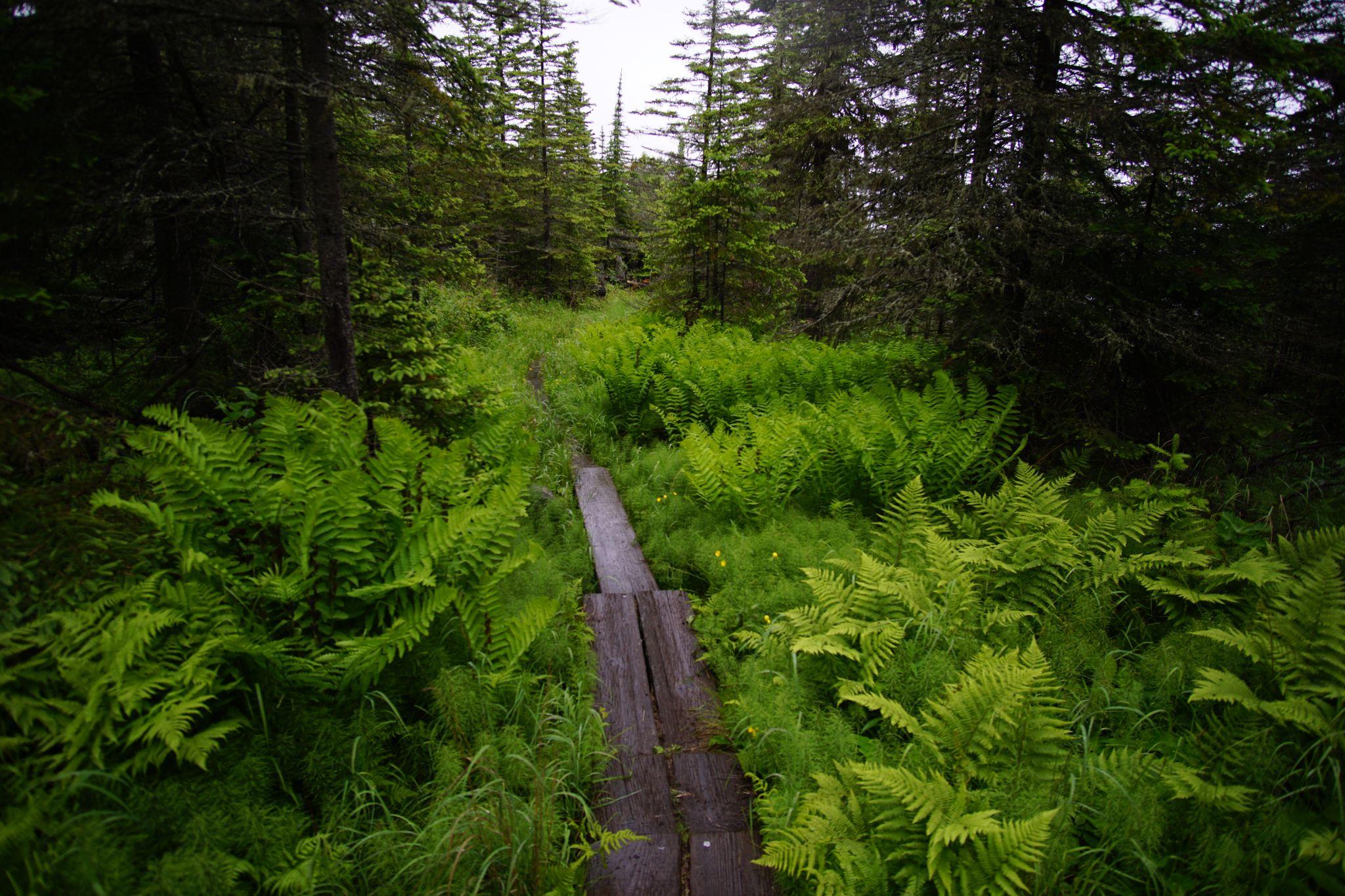
Isle Royale is a rugged trail system. With heavy packs, more technical sections of hiking, elevation, and weather, I recommend lower mileage than other adventures.
Trail conditions vary greatly. On the ridges, gravel paths and dirt single-track trails go through fields of wildflowers. There are many instances where we bounded over granite rocks in this area. To get to the ridges, we went on steep trails through changing boreal, maple, and birch forests interspersed with sunny areas. At the lower elevations, especially near rivers and flat areas, one will see lots of muds interspersed with long boardwalks. These boardwalks have the space for one individual at a time passing through beautiful unique environments. It is about a foot and a half to two feet paths. Along the coasts, the trail weaves between forest, rocky terrain, and smaller lowlands of boardwalks.
Popular Backpacking Routes and Example Itineraries
The backpacking loops rely heavily on your starting point on the island, Rock Harbor or Windigo, and the ferry or plane schedules. One of the more popular options for weeklong trips is to do an island traverse, which includes going from Windigo to Rock Harbor or Rock Harbor to Windigo. Once on the other side of the island, one can either hike back a different way or take Voyageur II to the original port. A third option is to take a sea plane from your destination as sea planes pick up from multiple places on the island.
3–4 Day Loop Options
From Rock Harbor
Start from Rock Harbor on day 1, and go to Daisy Farm Campground along the beautiful shoreline and boreal forest. For extra miles and views, go to Moskey Basin Campground. On day 2, into the interior of the island along the famous Greenstone Ridge to Objiway Tower. Continue along the amazing wildflowers, taking in views to Mount Franklin. Here you have the option to either go to remote Lane Cove Campground or Three Mile Campground. On day three return to Rock Harbor, this time taking the path on the Tobin Harbour side. Return to Rock Harbor. Drop your pack, and head to Scoville Point. For extra miles, consider going to Lookout Louise.
From Windigo
Take the Feldtman Ridge Loop starting with a trek from Windigo to Island Mine Campground. This is a strenuous day, though the views from Sugar Mountain are worth it. On day two, continue down to Siskiwit Bay to have a beautiful remote lunch. In the afternoon, go to Feldtmann Lake Campground. An optional and enjoyable hike to rainbow cover can be taken at sunset or sunrise the next day. On the third day, one can return to Windigo, passing the Grace Creek Overlook, returning to the visitor center and campground.
5–7 Day Routes
Greenstone Ridge End-to-End Itnerary
The Greenstone Ridge is the main ridge of the main island. It is beautiful, remote, rugged, and displays some of the best, true, and last wilderness in the Midwest. Tent sites in the interior of the island do not have shelters. The only campsite I would avoid is the Chickenbone because of the bugs. Water can be scarce along the ridge, so I recommend planning ahead and being opportunistic when clean water arrives. One can take the ferry to return to one’s starting point.
Minong Ridge End-to-End Itinerary
The Minong is the Greenstone’s more remote cousin. It follows a spectacular ridge giving great views of the island on one side and Lake Superior and Sleeping Giant on the other. It does have shelters, and bays with docks to rest at, which can be very nice after a long day. It is truly special. One can take the ferry to return to one’s starting point.
Greenstone + Minong Combo Itinerary
If you are down for a challenge, you can do the full Greenstone and Minong. Another idea is to do part of the Greenstone and part of the Minong crossing from one to the other at Hatchet Lake. This is a great option if one does not have enough time to do the full island, or if the ferry schedules do not add up. The Hatch Lake Trail includes an awesome beaver dam with lots of wildlife.
Day Hikes
- Scoville Point
- Lookout Louise
- Mount Franklin
- Stoll Trail
- Huginin Cove with Minong Ridge Overlook
- Grave Creek Overlook
- Sugar Mountain
Camping, Shelters & Water
Campgrounds Overview
Campgrounds are well-maintained and kept. Fires are not allowed for the most part on the island. Besides, everyone is within their tents by the time the sun goes down to avoid the bugs. Campgrounds at the edge of Lake Superior have shelters, which are huge, dry, and very nice. We tried to get these when possible. There is no guarantee that there will be a shelter, so you should bring a tent in case. There are toilets at all campsites.
Water on Isle Royale
Filtering water on Isle Royale will take longer than in most other places. This is due to the contamination from the commercial mines that closed over 100 years ago. The national park system recommends that water is filtered first through a microfiber pump or gravity filter, then chemically treated such as iodine with. If possible, go to the end of a dock or use fast moving water.
Author’s Note
We brought a gravity filter that kept getting clogged. We did not account for the amount of time that water filtering took on this trip. Everyone besides us had a pump-filter. I strongly recommend a pump-filter to save on time.
Food Storage
Isle Royale requires backpackers to store their food in safe containers such as hard-sided containers like a bear canister or put them in food lockers found on each campsite.
Mosquitoes & Insects
The mosquitoes and insects on Isle Royale are legendary. Urban areas around the world have complex drainage and sewer systems expressly to get rid of standing water, thus bugs. Isle Royale is not one of these places. If one is visiting at the very early or end of their open season, it may be too cold or too late for bugs to have an impact on one’s visits. Bugs do not like the cold and are most active in the spring, fading as summer goes on. Being so far north, “spring” shifts for the island and stretches later. Bug nets and bug proof clothing is a must for visitors. I recommend eating on the docks and ridges for some reprieve from the bugs. Mornings are typically less buggy. Bring bug spray.
Packing & Gear Checklist
This is not an exhaustive list, rather a list that I think is especially important to make your trip better.
Must-Have Gear
- Mosquito nets
- Boots or waterproof trail runners
- Hat
- Waterproof rain flies, possibly pants, and backpack covers
- Pump filters - not gravity filters
- First-aid
- Gallons of bug spray
Optional But Worth It
- Trekking poles
- Battery packs
Food & Cooking
- Calorie dense meals
- Cold soak lunches and breakfasts for extra time on the trail and less time being a bug buffet
- Lots of snacks
Weather, Storms & Safety
Lake Superior is known for its unpredictability, and Isle Royale rangers stress the importance of self-reliance. Weather, storms, and general safety are important to consider on a trip to a remote outpost such as this.
Lake Superior Weather Dynamics
Lake Superior has a reputation for being bad tempered, and we are at her mercy. Isle Royale weather is often reflective of a location much further north. Weather can change drastically from day-to-day. We did our trip in July. There was freezing rain one day, and the next, we were taking a dive into Superior because of the heat.
Heat & Exposure
The humidity and heat can play a factor in hiking. Especially on the ridges, Greenstone, Minong, there is little shade. Make sure to bring sunscreen and a sun hat. Also be aware of water sources, the water sources are somewhat scarce and can involve going down hundreds of feet in elevation off of the ridge.
Cold & Rain
On the opposite end of the spectrum, storms, cold, and rain can be impactful all year long. It got down to the forties while we were there in the summer. Please don’t assume that there will be a dry shelter at a campsite waiting for you. Also, most gear advertised as “rain proof” is actually water resistant for a very long time. Hypothermia can be experienced in the summer on this island.
Trail Safety
Trail Safety is very important as one can be days away from rescue. Walking deliberately, safely, and within the bounds of one’s limits is important. Self-reliance is an important part of this park.
Photography Tips on Isle Royale
Isle Royale is a photographer’s paradise. The solemnity and everchanging conditions made me want to keep taking pictures. Here are some great spots or times for photos
- Golden hour on Tobin Harbour
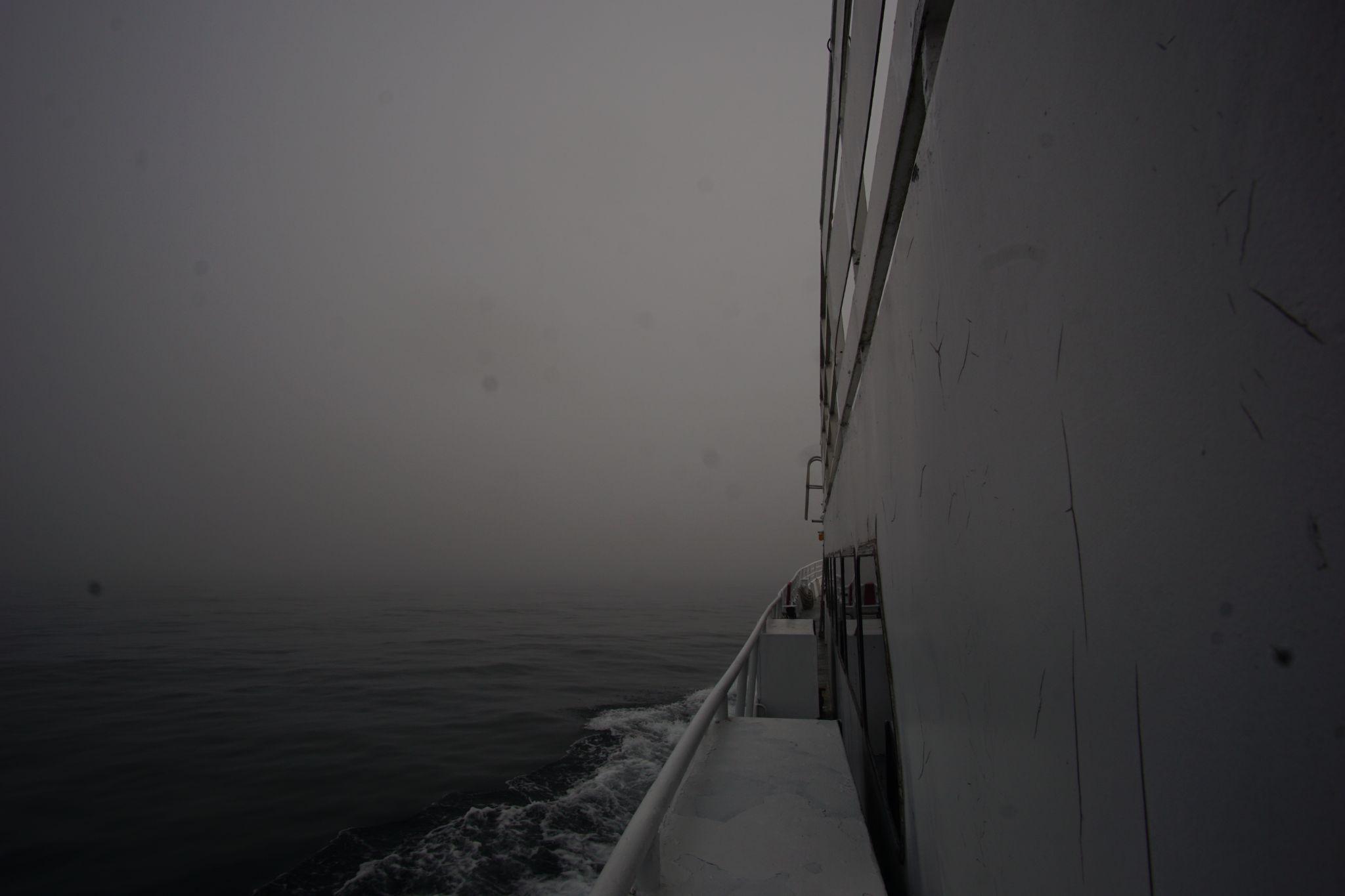
- Foggy mornings
- Endless wildflowers on the Greenstone and Minoog Ridges
- Loons and loonlings at Moskey Basin
Important Tips to remember for shooting here
- Have a rain protection
- Lenses are heavy. Consider bringing one with a wide focal range.
- Do not disturb the animals or environment
Frequently Asked Questions
- Are there bears on Isle Royale? No.
- How crowded are shelters? Shelters most accessible to Rock Harbor will get crowded during the summer months. Starting early and then ending early will ensure that you have a shelter. The sites in the inner part of the island attract a smaller crowd. We brought a tent as there’s no guarantee to get a shelter and the interior campsites do not have shelters.
- How cold does it get at night? Cold. Expect 40’s or 30’s, even in the summer.
- Can you swim? Yes, you can swim in the interior lakes or Lake Superior. Most docks and campsites have nice entry points. It is cold. It is fun and refreshing. Watch out for leeches.
- How do I protect myself against the bugs? Lots of bug spray. Baggy clothing covering almost all of one’s body. Mosquito nets.
- How bad are the mosquitoes? Bad. On a six day journey, I had in excess of 70 mosquito bites before I stopped counting, and that was almost entirely on my hands, neck, and forearms. The majority of my body was covered almost the entire time.
- Are there leeches? Yes, there are a lot of leeches. Be careful where you soak your feet. Leeches are found on the interior lakes and Lake Superior. They carry many diseases. If you do get bit, pinch the leech where it meets the skin and pull.
- Are there ticks? Yes, there are ticks. There are winter ticks, also known as moose ticks, that are attracted to, you guessed it, moose. They typically do not bite humans. Deer ticks, that carry Lyme diseases, are not known to be present.
- How busy is July vs September? July through August is the high season. The sites slow down in September as local students return to school. Late September can be cold.
- Is Isle Royale Open year round? No, it is closed from November 1st to April 15th. It is not accessible.
Advice
Isle Royale is one of my favorite parks, despite kicking my butt several times. It made things memorable. If I were to do it again, I would
- Lower my average mileage and include a plan for a rain day. I looked at the elevation and mileage and thought, of course we can do it, but camp chores can really add up on the island. For example, if you have to get water mid-day, that often means climbing down then up again large ridges. Then, the National Park Service recommends a two stage filtering process, which is an extra stage than most places.
- Bring a pump-filter. Gravity filters become clogged too easily on the island due to mining contamination.
- Rest on docks. This became our haven from bugs and a great place to see wildlife.
- Get up early and get miles early. Getting miles early improves the likelihood of a shelter. The morning is misty and gorgeous, even if you decide not to start hiking till later.
- Take self-reliance and safety seriously. One can be days away from reporting an issue and longer to receive aid.
- Enjoy. You’re in one of the most beautiful and pristine places on Earth. There will be minor inconveniences, but it’s not worth it to dwell on these.
- I recommend using alltrails or something similar. There was at least one instance where we needed it.
Closing Section
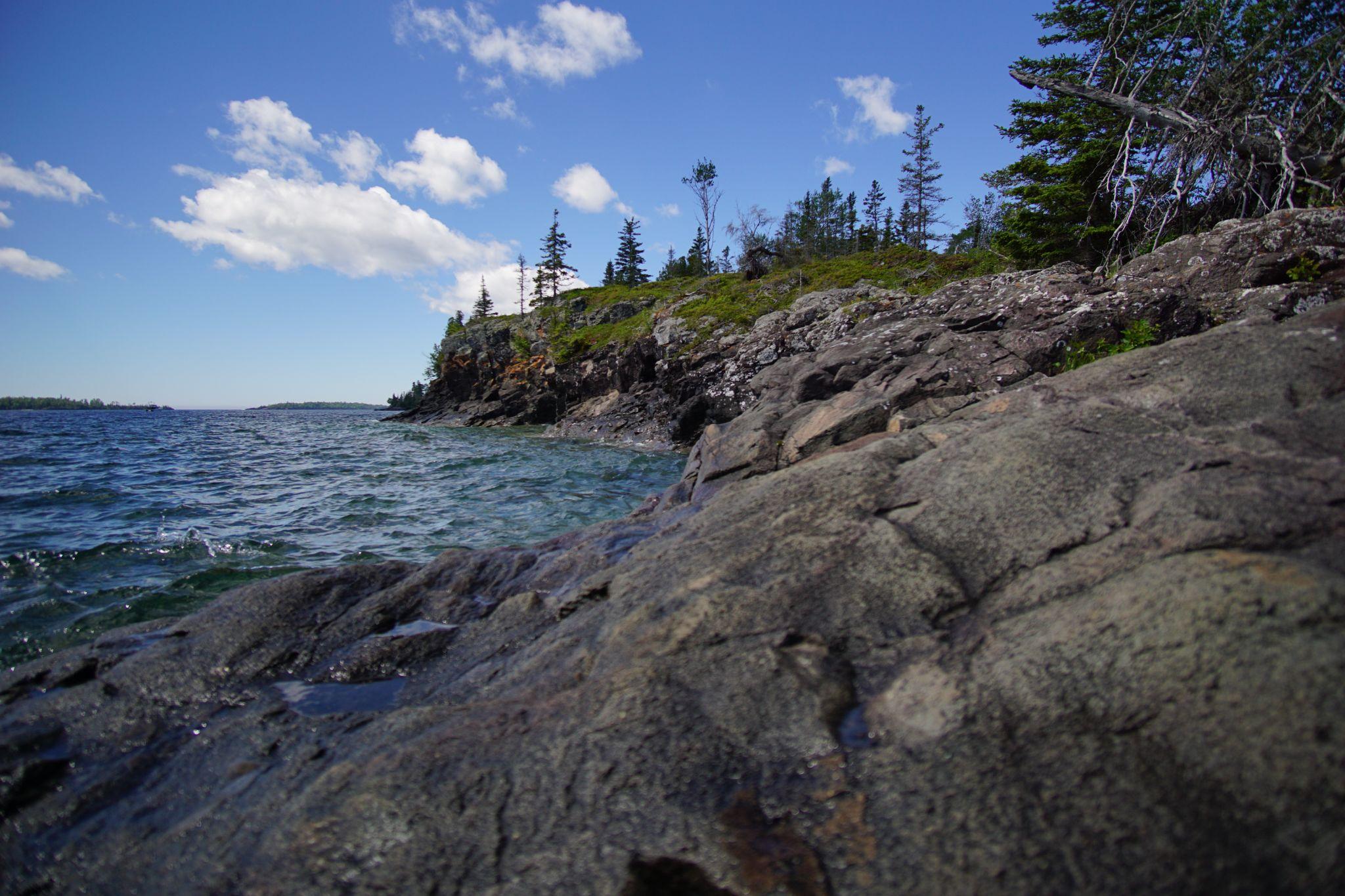
Isle Royale is gorgeous, rugged, and pristine in ways hard to detail. It has left an imprint on me, and I hope this guide allows you to go to the island.
By Joshua Zubik